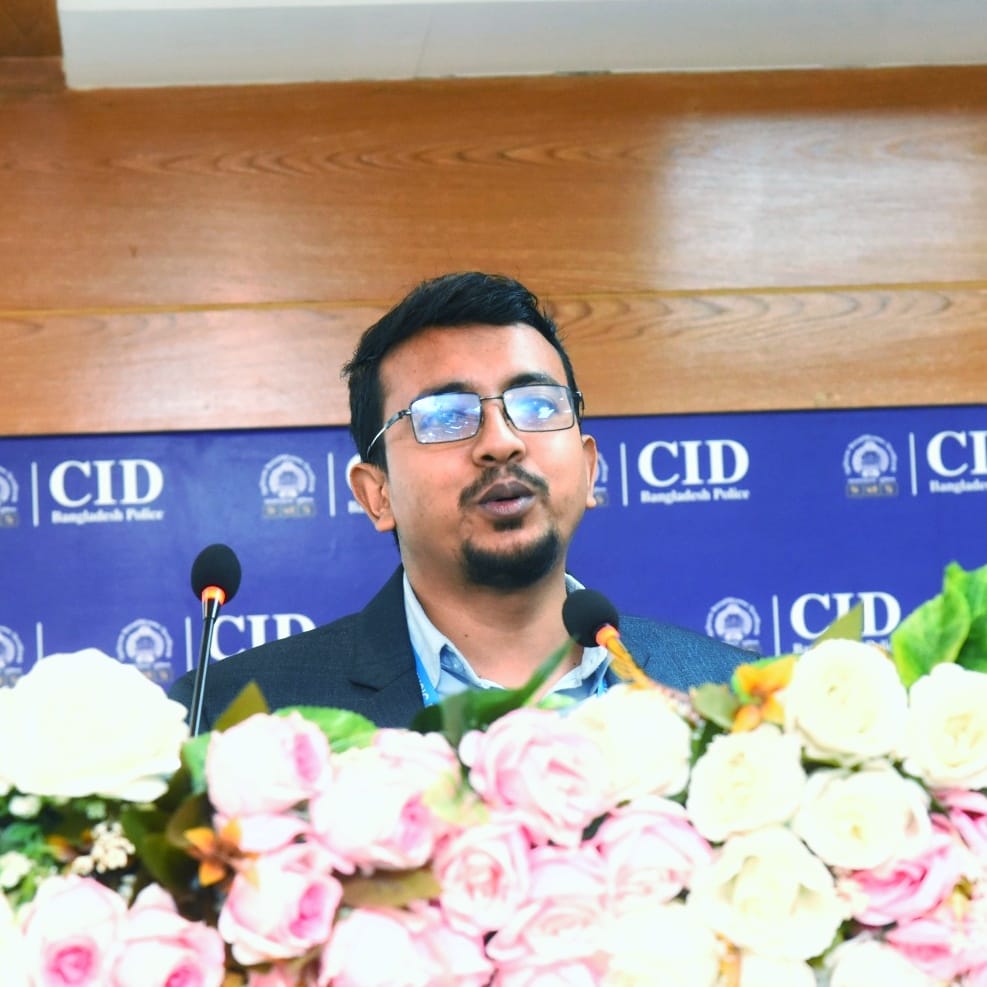
Who Is Md Meraz Hossain? Forensic Psychologist, Behavioural Scientist, Corporate Trainer and Founder of BIFPS
When people think about criminal investigations, they often imagine fingerprints, DNA evidence, CCTV footage, or forensic laboratories. Very few realize that one of the most powerful tools in solving crimes is understanding the human mind. Every criminal leaves behind not only physical evidence but also psychological evidence through behaviour, emotions, speech patterns, decision-making, and nonverbal communication.
In Bangladesh, one of the professionals working to bridge psychology with modern criminal investigation is Md Meraz Hossain (মোঃ মিরাজ হোসেন).
Today, Md Meraz Hossain is recognised for applying behavioural science and psychology to real-world challenges in criminal investigation, leadership, organisational development, and professional training. His work brings together expertise from clinical psychology, Forensic Psychology, behavioural science, and investigative practice to help individuals, organisations, and government agencies better understand people, improve decision-making, and solve complex human problems.
What distinguishes his work is its multidisciplinary nature. Rather than approaching human behaviour from a single perspective, he integrates psychological science with practical experience gained through counselling, criminal investigation, behavioural analysis, research, and executive training. This enables him to design programmes that are equally relevant for investigators, business leaders, HR professionals, educators, psychologists, and decision-makers.
However, his journey did not begin inside a forensic laboratory or police headquarters.
It began with one simple question:
Why do people behave the way they do?
A Passion That Started with Human Behaviour
From an early stage of his academic life, Meraz was fascinated by the complexity of human behaviour.
From an early stage of his academic journey, Md Meraz Hossain became fascinated by one subject that would later define his entire career: human behaviour. He wanted to understand why people make irrational decisions, why some individuals deceive while others remain truthful under pressure, how emotions influence judgement, and why two people can respond so differently to the same situation. These questions gradually evolved from academic curiosity into a lifelong commitment to studying psychology and applying it to real-world challenges.
a lifelong mission.
While many psychology graduates choose careers in counselling or organizational psychology, Meraz developed a strong interest in applying psychology to criminal investigations, behavioural assessment, and forensic science.
At that time, forensic psychology was still a relatively unexplored field in Bangladesh. Although psychology was taught in universities, there were very limited opportunities to apply psychological science within law enforcement, intelligence operations, private investigations, or criminal justice.
Instead of following a conventional career path, he decided to build expertise in this emerging discipline.
Building a Strong Academic Foundation
Meraz's professional journey is supported by years of academic study and international training.
He completed his Bachelor of Science (Honours) in Psychology, followed by a Master of Science in Clinical and Counselling Psychology from Jagannath University. To strengthen his clinical skills, he completed Postgraduate Training in Psychotherapy at Bangabandhu Medical University (BMU).
Rather than stopping there, he continued pursuing specialized education in forensic psychology, behavioural science, counselling, neuro-linguistic programming, psychotherapy, criminal profiling, and investigative psychology through numerous national and international institutions.
His pursuit of excellence eventually led him to the National Forensic Sciences University (NFSU), Gandhinagar, India, one of the world's leading universities dedicated exclusively to forensic sciences.
Today, he is pursuing a PhD in Forensic Psychology, conducting research on deception detection and behavioural indicators during forensic interviews.
His doctoral research focuses on understanding how verbal communication, facial expressions, eye movements, head movements, gestures, posture, and other behavioural cues differ when people tell the truth compared with when they attempt deception.
Unlike popular myths promoted by television dramas, deception cannot be identified through a single gesture. Human behaviour is far more complex. Through scientific research, Meraz aims to identify behavioural patterns that investigators can use responsibly alongside evidence-based interviewing techniques.
His research reflects a broader vision: making criminal investigations more scientific, ethical, and psychologically informed.
Beyond academic research, his doctoral work reflects a broader commitment to bridging the gap between scientific knowledge and professional practice. By combining research with training, consultation, and field experience, he aims to develop practical approaches that can support investigators, psychologists, organisations, and policymakers in making more informed decisions based on behavioural evidence.
Why His Approach Is Different
Many professionals specialize in a single discipline throughout their careers. Some focus on psychology, others on leadership, coaching, criminal investigation, or business consulting. Md Meraz Hossain chose a different path.
His work is built on the belief that understanding people requires more than one perspective. Human behaviour cannot be fully explained through clinical psychology alone, nor through forensic science, business management, or communication techniques in isolation. It requires an integrated understanding of how people think, feel, communicate, make decisions, and respond to different situations.
Over the years, he has developed a multidisciplinary approach that combines clinical psychology, forensic psychology, behavioural science, Neuro-Linguistic Programming (NLP), counselling, organisational psychology, and investigative psychology into practical learning experiences.
Instead of treating these disciplines as separate areas of expertise, he demonstrates how they complement one another in practice. This integrated perspective enables professionals from different sectors to understand behaviour more effectively and apply psychological principles within their own fields of work.
This integrated approach has become one of the defining characteristics of his work and forms the foundation of every training programme, consultation, investigation, and research project he undertakes.
A Vision Beyond Personal Success
While many professionals focus on advancing their own careers, Md Meraz Hossain has always been driven by a broader vision: building the future of forensic psychology in Bangladesh.
Meraz believes in building an entire profession. His long-term vision extends far beyond personal recognition or professional achievements.
He dreams of establishing Bangladesh's first internationally recognized Forensic University and multidisciplinary Forensic Science Laboratory, where students, investigators, psychologists, lawyers, judges, forensic experts, and researchers can learn modern forensic science using international standards.
His goal is to reduce the gap between Bangladesh and developed countries in forensic education, criminal investigation, behavioural science, and evidence-based justice.
Through this vision, he hopes to inspire a new generation of forensic psychologists, criminal profilers, behavioural analysts, and investigators who can contribute to a stronger criminal justice system.
This vision also inspired the establishment of the Bangladesh Institute of Forensic Psychology & Sciences (BIFPS Consultancy Ltd.), an organization dedicated to promoting forensic psychology, behavioural science, professional investigations, and specialized training throughout Bangladesh.The idea behind BIFPS was not simply to establish another training institute. It was to create a professional platform where forensic psychology, behavioural science, investigative consultation, research, and specialised education could work together under one roof. By bringing these disciplines together, he hopes to strengthen professional standards while making behavioural science more accessible to investigators, organisations, students, and the wider community.
For Meraz, education is not simply about earning degrees or certificates.
It is about creating practical skills that help solve real-world problems, improve investigations, strengthen organizations, and ultimately contribute to a safer society.
From Clinical Psychology to Forensic Psychology: A Mission to Modernize Criminal Investigation
For decades, criminal investigations in many parts of the world relied heavily on physical evidence, witness testimony, and investigator experience. While these remain essential, modern investigations increasingly recognize another critical source of evidence: human behaviour.
Every suspect, witness, and victim communicates far more than words alone. Facial expressions, eye contact, posture, speech patterns, emotional responses, decision-making processes, and behavioural changes can all provide valuable information when interpreted scientifically. This is where forensic psychology plays a vital role.
Md Meraz Hossain has dedicated his professional career to bringing these evidence-based psychological techniques into Bangladesh's criminal justice system. Rather than relying on myths or popular misconceptions about body language and deception, his approach is grounded in psychology, behavioural science, forensic interviewing principles, and continuous research.
His work focuses on helping investigators ask better questions, build rapport with interviewees, understand behavioural changes, identify inconsistencies, and evaluate information using psychological principles instead of assumptions. He believes that effective investigations are not about forcing confessions but about understanding human behaviour while respecting ethics and scientific standards.
This evidence-based philosophy continues to influence his work across research, professional training, behavioural consultation, and investigative practice, reinforcing his belief that understanding people is essential to effective decision-making in every profession.
Establishing the Bangladesh Institute of Forensic Psychology & Sciences (BIFPS)
Recognizing the lack of specialized forensic psychology services in Bangladesh, Md Meraz Hossain founded the Bangladesh Institute of Forensic Psychology & Sciences (BIFPS Consultancy Ltd.).
BIFPS was established to address a significant gap in Bangladesh, where specialised services integrating forensic psychology, behavioural science, private investigation, forensic consultation, and professional training were largely unavailable within a single private institution. The organisation was created to transform psychological knowledge into practical solutions for investigators, organisations, legal professionals, businesses, and individuals seeking scientific approaches to understanding human behaviour.
Today, BIFPS provides specialised services in forensic psychology, criminal profiling, behavioural analysis, private investigation, polygraph examination, forensic interviewing, forensic document examination, handwriting and signature verification, fingerprint analysis, psychological assessment, corporate behavioural consulting, and professional training. By integrating these services within one organisation, BIFPS offers clients a multidisciplinary approach that is still uncommon in Bangladesh.
Unlike many organizations that focus only on classroom-based training, BIFPS emphasizes practical applications. Participants are encouraged to analyse real-life scenarios, understand investigative decision-making, and apply psychological concepts to actual workplace and investigative challenges.
The institute also serves businesses, educational institutions, legal professionals, and private clients seeking behavioural expertise beyond traditional consulting services.
Advanced Training for Law Enforcement and Intelligence Professionals
One of the most significant aspects of Md Meraz Hossain's career has been his contribution to professional capacity building for law enforcement agencies.
Since beginning this work, he has trained more than 1,500 police officers, investigators, military personnel, and intelligence professionals through workshops, intensive training programmes, seminars, and specialized courses.
Participants have included officers from organizations such as:
- Bangladesh
Police
- Criminal
Investigation Department (CID)
- Police
Bureau of Investigation (PBI)
- Police
Staff College (PSC)
- Special
Branch (SB)
- Detective
Training School (DTS)
- Rapid
Action Battalion (RAB)
- Directorate
General of Forces Intelligence (DGFI)
- National
Security Intelligence (NSI)
- Military
Police
- School
of Intelligence
- Other
national security and government organizations
His programmes are designed not simply to teach theory but to improve investigative thinking and decision-making under real-world conditions.
Depending on the organisation and operational requirements, these programmes combine investigative interviewing, criminal profiling, behavioural analysis, psychological interrogation, rapport-based communication, body language interpretation, deception detection, cognitive interviewing, statement analysis, and evidence-based interviewing techniques.
Rather than relying solely on classroom lectures, participants work through practical exercises, behavioural case studies, simulated interviews, and real investigative scenarios designed to strengthen analytical thinking and professional decision-making.
Why Organizations Invite Md Meraz Hossain as a Trainer
Training is no longer just about delivering information. Organizations today expect measurable improvements in leadership, communication, decision-making, customer relationships, investigative capability, and overall performance. This is where Md Meraz Hossain's multidisciplinary approach makes a significant difference.
His multidisciplinary background enables him to combine psychological science with practical experience from counselling, forensic psychology, behavioural analysis, criminal investigation, organisational development, and executive education. As a result, participants gain practical behavioural insights that can be applied immediately within their own professional environments.
This unique combination allows participants to understand not only what people do, but also why they do it.
Whether he is training police investigators, intelligence officers, corporate executives, HR professionals, entrepreneurs, university students, or mental health practitioners, every programme is designed around one central objective: helping people make better decisions by understanding human behaviour.
Rather than relying on motivational speeches or theoretical lectures, his sessions are practical, interactive, and based on real situations. Participants analyse behavioural patterns, solve realistic scenarios, practise communication strategies, and develop skills they can immediately apply in their workplaces.
His training programmes generally fall into four broad areas:
His training portfolio spans four broad areas: professional development for law enforcement and intelligence agencies; executive and corporate leadership programmes; advanced psychology training for mental health professionals; and behavioural skills development for students, entrepreneurs, educators, and other professionals. Each programme is customised according to the participants' responsibilities, learning objectives, and organisational needs rather than following a standard curriculum.
Across every programme, the philosophy remains unchanged. For Md Meraz Hossain, successful training is measured not by the information delivered during a session, but by the decisions participants make after they return to their workplaces. It should transform the way people think, communicate, observe, and solve problems.
Helping People Find the Truth Through Behavioural Science
One of the biggest misconceptions about criminal investigation is that solving a case depends only on physical evidence. While fingerprints, DNA, CCTV footage, digital evidence, and forensic laboratory analysis are essential, they tell only part of the story.
Behind every crime is a human being.
Every suspect, victim, witness, employee, business partner, or fraudster behaves differently under pressure. Understanding those behavioural differences often helps investigators ask better questions, identify inconsistencies, evaluate credibility, and plan more effective interviews.
This is where forensic psychology and behavioural science become invaluable.
Drawing upon his experience in psychology, behavioural science, and investigative practice, Md Meraz Hossain supports investigators, organisations, legal professionals, and private clients in understanding behaviour through structured observation, evidence-based interviewing, and scientific behavioural analysis. His approach emphasises careful assessment rather than assumptions, recognising that behavioural evidence is most valuable when interpreted alongside other forms of evidence.
Rather than relying on intuition or myths, his work combines psychology, observation, structured interviewing, behavioural analysis, and forensic methodologies to help clients make informed decisions.
Private Investigation Services in Bangladesh
Private investigations are becoming increasingly important in Bangladesh. Individuals, families, lawyers, businesses, and organizations often require independent investigations when traditional approaches cannot provide clear answers.
Through Bangladesh Institute of Forensic Psychology & Sciences (BIFPS Consultancy Ltd.), Md Meraz Hossain provides professional consultation for a wide range of investigative matters.
These include:
- Personal
investigations
- Corporate
investigations
- Internal
workplace investigations
- Employee
misconduct investigations
- Fraud-related
behavioural assessment
- Due
diligence investigations
- Background
verification
- Relationship
investigations
- Missing
person consultation
- Behavioural
consultation for legal cases
- Interview
strategy planning
Every investigation follows ethical and legal principles while maintaining strict confidentiality.
Each investigation is approached systematically through behavioural assessment, information analysis, documentation, and professional consultation, ensuring that conclusions are based on evidence rather than intuition.
Criminal Profiling: Understanding Criminal Behaviour Beyond the Crime
One of Md Meraz Hossain's major areas of expertise is criminal profiling.
Criminal profiling is not about guessing who committed a crime. Instead, it involves analysing behavioural patterns to understand how offenders think, make decisions, and interact with victims.
Through years of research and professional training, Meraz has developed structured profiling frameworks that help investigators evaluate numerous behavioural dimensions, including:
His profiling framework examines multiple behavioural dimensions, including personality, emotional regulation, decision-making patterns, communication style, stress responses, cognitive processing, interpersonal relationships, leadership tendencies, risk-taking behaviour, moral reasoning, and lifestyle factors. By evaluating these characteristics together rather than in isolation, investigators gain a broader understanding of behaviour that can support interview planning, investigative strategy, and behavioural assessment.
These behavioural observations can assist investigators in planning interviews, understanding offender motivations, and developing investigative strategies.
His profiling methods are designed to complement physical evidence rather than replace it.
Behavioural Analysis: Reading Behaviour Scientifically
Many people believe body language alone can reveal whether someone is lying.
Reality is far more complex. Human behaviour changes for many reasons including stress, anxiety, fear, cultural differences, personality, illness, fatigue, and environmental conditions.
Md Meraz Hossain emphasizes that behavioural analysis should never rely on a single gesture.
Instead, investigators should observe:
Instead of relying on isolated gestures, he teaches investigators and professionals to evaluate behaviour through baseline comparison, behavioural clusters, emotional responses, verbal consistency, contextual factors, cognitive load, and changes that occur throughout an interaction. This evidence-based approach reduces false assumptions and encourages more balanced behavioural assessment.
This scientific approach reduces the risk of false assumptions while improving investigative accuracy.
His training programmes teach participants how to observe behaviour systematically instead of depending on myths commonly promoted in movies or social media.
Polygraph Examination and Deception Detection
As interest in deception detection grows in Bangladesh, many organizations and individuals seek professional guidance on the role of polygraph examinations.
Md Meraz Hossain received specialized training in Polygraph Examination and Lie Detection during his forensic education and continues to study evidence-based methods for investigative interviewing and deception assessment.
He believes it is important to clarify what a polygraph can and cannot do.
A polygraph examination is an investigative support tool, not a machine that determines guilt or innocence. It measures physiological responses that may indicate psychological changes during carefully structured questioning.
The results should always be interpreted alongside:
He emphasises that polygraph findings should always be interpreted alongside physical evidence, documentary records, witness statements, behavioural observations, investigative findings, and professional judgement. Within this broader investigative framework, the polygraph serves as a supportive assessment tool rather than a standalone method for determining truth or deception.
Responsible investigators understand that no single technique should determine the outcome of an investigation. This evidence-based philosophy guides every consultation and training programme conducted through BIFPS.
Handwriting, Signature and Document Examination
Forgery, signature disputes, and document fraud continue to affect businesses, financial institutions, legal proceedings, and private individuals.
To address these challenges, Md Meraz Hossain has received specialized training in forensic document examination from internationally recognized experts.
BIFPS provides consultation in areas such as:
- Signature
verification
- Handwriting
comparison
- Document
examination
- Forgery
analysis
- Alteration
detection
- Behavioural
interpretation of handwriting where appropriate
These services are intended to assist legal professionals, businesses, investigators, and individuals seeking expert consultation.
SEAH and Sensitive Investigations
Investigating allegations involving Sexual Exploitation, Abuse, and Harassment (SEAH) requires specialized knowledge, professionalism, and sensitivity.
Md Meraz Hossain successfully completed the Investigator Qualification Training Scheme (IQTS) Tier 2 and Tier 3 for Protection from Sexual Exploitation, Abuse, and Harassment.
This internationally recognized training strengthened his expertise in:
- Trauma-informed
interviewing
- Survivor-centred
investigations
- Ethical
evidence collection
- Witness
interviewing
- Documentation
standards
- Safeguarding
principles
- Professional
investigative procedures
These skills are particularly valuable for humanitarian organizations, NGOs, international agencies, and institutions responsible for handling sensitive complaints.
Every Investigation Begins With Understanding People
Technology has transformed criminal investigations.
Artificial intelligence, digital forensics, DNA analysis, cyber investigations, and surveillance systems have all become increasingly sophisticated.
Yet one element remains unchanged.
Every investigation ultimately involves people.
Every investigation involves people with different experiences, motivations, emotions, and perspectives. Understanding how individuals communicate, respond under pressure, remember events, and make decisions remains one of the most valuable skills an investigator can develop, regardless of how advanced forensic technology becomes.
Understanding human behaviour remains one of the most valuable skills any investigator can develop.
This belief continues to guide Md Meraz Hossain's work as a forensic psychologist, behavioural analyst, trainer, researcher, and consultant.
Rather than viewing psychology as a discipline separate from forensic science, Md Meraz Hossain considers behavioural science an essential component of modern investigation. By integrating psychological insight with physical evidence and professional interviewing, investigators can make more informed, balanced, and evidence-based decisions.
Psychology for Business: Helping Organizations Understand People
While many professionals know Md Meraz Hossain for his work in forensic psychology and criminal investigations, an equally important part of his career is helping businesses understand people.
Every organization, regardless of its industry, depends on human behaviour. Customers decide whether to buy or not. Employees decide whether to stay or leave. Managers influence team performance. Leaders shape organisational culture. Behind every business decision is a psychological process.
Md Meraz Hossain believes that many business challenges are not purely operational problems—they are behavioural problems. When organizations understand how people think, communicate, make decisions, build trust, respond to pressure, and interact with others, they can improve performance at every level.
His transition into corporate training happened naturally through years of counselling, behavioural consultation, and investigative work. Across different industries, he observed that many workplace challenges—including poor communication, ineffective leadership, employee conflict, low motivation, customer dissatisfaction, and recruitment mistakes—were rooted in human behaviour rather than technical limitations.
These experiences encouraged him to adapt behavioural science for organisational settings, helping businesses understand people more effectively and create healthier workplace cultures through evidence-based psychology.
Unlike conventional corporate training that focuses mainly on communication techniques or short-term motivation, his programmes emphasise behavioural understanding. Participants learn why people make decisions, resist change, build trust, respond to pressure, collaborate with others, and influence organisational culture. This deeper understanding enables leaders to address the causes of workplace challenges rather than only their symptoms.
Among his signature corporate programmes, Customer Understanding & Manipulation Techniques has become one of the most distinctive behavioural science training programmes developed in Bangladesh. Rather than teaching sales scripts or persuasion tricks, the programme explores the psychological principles behind customer behaviour, trust, influence, emotional decision-making, negotiation, and long-term relationship building.
Participants learn how people make purchasing decisions, why customers remain loyal to one brand but not another, how emotions influence business decisions, and how ethical behavioural strategies can improve customer experience, leadership, marketing, sales, and communication. The programme combines insights from consumer psychology, behavioural science, communication psychology, counselling, and Neuro-Linguistic Programming (NLP), making it valuable for executives, entrepreneurs, HR professionals, sales teams, customer service professionals, and business leaders.
Beyond customer psychology, Md Meraz Hossain also delivers executive and organisational training on topics such as:
- Leadership
Psychology
- Behavioural
Leadership
- Recruitment
& Interview Psychology
- Employee
Behaviour Analysis
- Emotional
Intelligence at Work
- Conflict
Resolution
- Negotiation
Psychology
- Team
Communication
- Organisational
Behaviour
- Managing
Gen Z Employees
- Behavioural
Sales Techniques
- Decision-Making
Psychology
- Executive
Presence
- Psychological
Safety in Teams
Before conducting any programme, Md Meraz Hossain studies the organisation, participants, industry context, and expected learning outcomes. This preparation allows each workshop to address practical workplace challenges rather than relying on generic examples. His clients include business owners, multinational companies, financial institutions, healthcare organisations, educational institutions, HR professionals, entrepreneurs, and leadership teams seeking practical behavioural solutions for organisational growth.
For Md Meraz Hossain, corporate training succeeds when participants return to work with greater behavioural awareness, stronger leadership skills, improved communication, and practical strategies that create measurable improvements within their organisations.
Why Organizations Continue to Invite Md Meraz Hossain
Many organisations invest heavily in professional development, yet lasting results depend on whether participants can apply what they learn in their daily work. This belief has shaped Md Meraz Hossain's approach to training from the beginning of his career.
This philosophy has become one of the defining characteristics of Md Meraz Hossain's work as a trainer.
Rather than delivering the same presentation to every audience, he begins by understanding the organization itself. Before conducting a programme, he studies the participants, the industry, the organisational challenges, and the learning objectives. As a result, every workshop is designed specifically for the people in the room instead of following a standard template.
His training style combines psychology with practical experience. Instead of long lectures, participants work through realistic scenarios, behavioural case studies, role-playing exercises, group discussions, live demonstrations, and decision-making activities. This approach keeps participants engaged while helping them immediately connect psychological concepts with real workplace situations.
One of the reasons organizations repeatedly invite him is his ability to explain complex ideas in a simple and practical way. Whether discussing forensic psychology, customer behaviour, leadership, communication, body language, criminal profiling, or emotional intelligence, he focuses on helping participants understand how these concepts can improve their everyday work rather than presenting psychology as a purely academic subject.
Participants often describe his workshops as practical, engaging, and highly interactive because every session encourages discussion, behavioural observation, critical thinking, and the application of psychology to realistic professional situations rather than passive learning.
His ability to connect behavioural science with investigation, counselling, leadership, organisational development, and communication allows participants to view human behaviour from multiple perspectives while applying those insights directly within their own professional roles.
This integrated approach helps participants see human behaviour from multiple perspectives instead of relying on one technique or model.
For organizations, this means training that goes beyond motivation. It helps improve leadership, strengthen communication, develop better recruitment decisions, increase customer understanding, build stronger teams, and create lasting behavioural change.
For Md Meraz Hossain, successful training is not measured by applause at the end of a session. It is measured by what participants continue to do differently weeks, months, and even years after the programme has ended.
One Mission, Many Disciplines
People often ask Md Meraz Hossain a simple question:
"Are you a forensic psychologist, a clinical psychologist, an NLP trainer, a corporate trainer, a criminal profiling expert, or a private investigator?"
His answer is always the same.
"I study human behaviour."
Everything else is simply a different application of that knowledge.
As a Clinical Psychologist, he studies how emotions, personality, trauma, and mental health influence people's thoughts and behaviour.
As a Forensic Psychologist, he studies criminal behaviour, deception, investigative interviewing, victim psychology, and behavioural evidence.
As a Corporate Trainer, he helps leaders understand employees, customers, negotiation, leadership, workplace communication, and organisational culture.
As an NLP Trainer and Coach, he teaches behavioural change, communication, confidence building, self-coaching, and personal development.
As a Researcher, he studies why people behave differently under stress, during interviews, and while making important decisions.
Although these fields may appear different, they all share one foundation:
Understanding why people think, feel, communicate, and behave the way they do.
Although these professional roles appear different, they are connected by a single purpose: helping people understand behaviour more accurately and apply psychological knowledge to real-world situations.
Rather than separating psychology into different subjects, he believes human behaviour should be understood as one interconnected system. The same behavioural principles that help investigators interview suspects can help managers lead teams, entrepreneurs understand customers, teachers motivate students, counsellors support clients, and individuals become better communicators.
This integrated perspective has become one of the defining characteristics of his work. Instead of teaching isolated theories, he helps people connect psychology with everyday decision-making, leadership, investigation, business, education, and personal growth.
For Md Meraz Hossain, psychology is not divided into separate professions.
It is one science with countless practical applications.
A Different Philosophy of Training
For Md Meraz Hossain, training is not an event—it is a process of changing the way people think.
Many professional development programmes focus on delivering information. Participants attend a workshop, take notes, receive a certificate, and return to work without changing their behaviour. Md Meraz Hossain believes that real learning begins only when knowledge changes the way people observe, communicate, analyse, and make decisions.
This belief has shaped his training philosophy from the very beginning of his career.
Every programme is designed to answer one question:
"How will participants use this knowledge tomorrow?"
Instead of relying on long presentations, he creates highly interactive learning environments where participants actively engage with ideas. His sessions include case studies, behavioural analysis, group discussions, role-playing, live demonstrations, problem-solving exercises, and practical applications drawn from real investigations, counselling experiences, business challenges, and everyday situations.
Participants are encouraged to question assumptions, analyse behaviour, discuss different perspectives, and discover solutions for themselves rather than simply memorising theories. This approach creates deeper understanding and improves long-term retention.
Another distinguishing feature of his work is the ability to integrate knowledge from multiple disciplines into one learning experience. Instead of presenting isolated theories, he demonstrates how behavioural science can support criminal investigation, leadership, customer understanding, communication, coaching, organisational development, and everyday decision-making.
Whether he is working with investigators, corporate leaders, HR professionals, entrepreneurs, teachers, healthcare professionals, or university students, the objective remains the same: to provide practical knowledge that participants can immediately apply in their own professional environments.
Over the years, this practical, psychology-based approach has helped establish Md Meraz Hossain as a trainer who focuses not only on delivering content but on developing critical thinking, behavioural awareness, communication skills, and professional confidence.
For him, the true measure of a successful training programme is not the number of participants in the room or the certificates distributed at the end of the day. Success is reflected in the decisions participants make afterwards, the teams they lead more effectively, the investigations they conduct more professionally, the customers they understand more deeply, and the lives they improve through the knowledge they have gained.
Beyond Training: A Vision for the Future of Forensic Science in Bangladesh
Every professional has a career.
Very few have a mission.
For Md Meraz Hossain, forensic psychology is not simply a profession or an academic discipline. It is a long-term commitment to strengthening Bangladesh's criminal justice system, improving investigative standards, and introducing scientific approaches to understanding human behaviour.
Throughout his journey, he has witnessed the growing demand for trained investigators, forensic psychologists, behavioural analysts, and scientific interviewing specialists. At the same time, he has also observed the challenges faced by students and professionals who wish to pursue careers in forensic science but have limited access to specialized education and practical training.
These experiences have shaped one of his biggest ambitions.
To establish Bangladesh's first internationally recognized Forensic University and multidisciplinary Forensic Science Laboratory.
He believes Bangladesh has the talent, curiosity, and determination to become a regional leader in forensic science. What is needed is an institution where students, researchers, investigators, lawyers, judges, psychologists, doctors, and forensic experts can learn, collaborate, conduct research, and solve real-world problems together.
His vision is not limited to building classrooms or laboratories. It is about creating an ecosystem where science supports justice, research improves investigations, and education produces professionals capable of serving society with integrity.
Research That Bridges Science and Practice
As a PhD researcher in Forensic Psychology at the National Forensic Sciences University (NFSU), India, Md Meraz Hossain is exploring one of the most challenging questions in criminal investigation:
How does human behaviour change when a person tells the truth compared with when they attempt deception?
His doctoral research examines behavioural indicators observed during forensic interviews, including facial expressions, eye movements, head movements, verbal responses, gestures, posture, and other nonverbal behaviours.
Rather than searching for a single "lie detection cue," his work recognises that deception is a complex psychological process. Human behaviour is influenced by personality, emotions, stress, culture, memory, and context. Understanding these factors requires scientific observation rather than assumptions.
The ultimate goal of this research is to contribute practical knowledge that investigators, psychologists, and researchers can use to conduct more effective, ethical, and evidence-based interviews.
Alongside his doctoral work, he continues to contribute to research, course development, and professional discussions in forensic psychology, behavioural science, and investigative interviewing.
Building Professionals, Not Followers
One principle has remained constant throughout Md Meraz Hossain's career:
Education should create independent thinkers, not dependent followers.
Whether teaching psychology students, police investigators, HR professionals, entrepreneurs, or mental health practitioners, he encourages participants to ask questions, evaluate evidence, challenge assumptions, and continue learning long after a course has ended.
This philosophy explains why many of his training programmes extend beyond technical knowledge. Participants are encouraged to develop critical thinking, observation skills, ethical decision-making, communication, and emotional intelligence—qualities that are valuable in every profession.
For him, a successful training programme is not measured by the number of certificates distributed but by the confidence participants gain to solve problems in their own workplaces and communities.
Beyond NLP: Understanding Human Behaviour for Everyday Success
Although forensic psychology is central to his professional work, Md Meraz Hossain believes that behavioural science should not be limited to criminal investigations or clinical practice. The same psychological principles that improve investigative interviewing can also strengthen leadership, customer relationships, teamwork, negotiation, communication, and personal development. This belief has allowed him to apply psychology across government organisations, businesses, educational institutions, and everyday life.
His approach to Neuro-Linguistic Programming (NLP) is shaped by experience in counselling, forensic psychology, behavioural science, and organisational development. Instead of treating NLP as a collection of communication techniques, he presents it as a practical framework for understanding thinking patterns, behavioural change, emotional regulation, influence, and effective communication in both professional and personal settings.
This unique combination has made his NLP programmes popular among corporate executives, HR professionals, entrepreneurs, educators, psychologists, university students, business owners, and professionals from many different backgrounds.
His workshops go beyond public speaking or positive thinking. Participants learn practical psychological strategies for:
- Building
self-confidence
- Improving
communication
- Understanding
personality differences
- Managing
emotions under pressure
- Developing
leadership skills
- Influencing
ethically
- Strengthening
negotiation skills
- Building
trust and rapport
- Resolving
interpersonal conflicts
- Understanding
customer behaviour
- Developing
emotional intelligence
- Coaching
themselves and others
One area that participants particularly appreciate is his practical approach to self-coaching. Instead of encouraging people to depend on motivational speakers, he teaches them how to become their own coach by understanding their thinking patterns, emotional reactions, limiting beliefs, habits, and behavioural choices.
Rather than offering temporary motivation, his self-development programmes encourage participants to understand the psychological patterns that influence confidence, communication, decision-making, habits, and long-term behavioural change. The objective is to help individuals become more self-aware and capable of directing their own personal and professional growth.
For Md Meraz Hossain, psychology is not just an academic subject or a therapeutic technique. It is a practical life skill that helps people become better leaders, professionals, entrepreneurs, parents, investigators, teachers, and human beings.
Sharing Knowledge Beyond the Training Room
Md Meraz Hossain believes that knowledge should never remain confined to classrooms.
To make psychology and forensic science accessible to a wider audience, he actively shares educational content through podcasts, television interviews, newspapers, seminars, webinars, and social media.
He has participated in more than fifteen podcast conversations and media interviews with platforms including 2 Cent Podcast, Nur Rahman Podcast, Maruf Hayat, Bangladesh Pratidin, Boishakhi TV, Danguli Enterprise, Yahia Amin, Ferdous Bappy, RJ Nirob, Speak with Rashid, and other educational initiatives.
These discussions cover a wide range of topics, from forensic psychology and criminal behaviour to leadership, customer psychology, body language, mental health, investigative interviewing, and behavioural science.
His goal is not simply to explain psychological concepts but to inspire curiosity, encourage critical thinking, and demonstrate how scientific knowledge can improve everyday life.
His media appearances are driven by a simple objective: making psychology and forensic science accessible to everyone. By discussing complex topics in clear and practical language, he hopes to inspire students, support professionals, encourage evidence-based thinking, and increase public awareness of the role behavioural science can play in education, business, leadership, mental health, and the justice system.
Why Human Behaviour Is the Most Valuable Skill of the 21st Century
Technology is changing faster than ever before. Artificial intelligence can analyse data, write reports, automate routine tasks, and even assist in decision-making. Technical knowledge is becoming more accessible, and information is available to almost everyone within seconds.
Yet one challenge remains uniquely human:
Understanding people.
Whether someone is leading an organisation, investigating a crime, interviewing a job candidate, negotiating a business deal, managing a team, counselling a client, or serving customers, success ultimately depends on understanding human behaviour.
Why do some leaders inspire trust while others create fear?
Why do customers choose one brand over another?
Why do talented employees leave good organisations?
Why do negotiations fail even when both sides want an agreement?
Why do intelligent people make irrational decisions under pressure?
Why do some investigators obtain reliable information while others struggle despite having the same evidence?
The answer to each of these questions lies not only in knowledge or experience, but in psychology.
These observations have reinforced his belief that behavioural intelligence will become one of the defining professional competencies of the future. As technology continues to automate routine tasks, the ability to understand people, communicate effectively, build trust, and make informed behavioural decisions will remain uniquely human skills that cannot easily be replaced.
Throughout his career, he has worked across law enforcement, private investigation, mental health, higher education, corporate consulting, and professional training. Although these fields appear very different, they all revolve around one common challenge: understanding people.
For investigators, understanding behaviour helps reveal the truth.
For leaders, it helps build trust and influence.
For HR professionals, it helps recruit and develop the right people.
For entrepreneurs, it helps understand customers and build lasting relationships.
For teachers, it helps inspire learning.
For psychologists, it helps support positive behavioural change.
For every profession, psychology provides a deeper understanding of why people think, communicate, decide, and behave the way they do.
This belief has become the foundation of Md Meraz Hossain's work. Rather than teaching isolated techniques, he encourages professionals to develop behavioural intelligence—the ability to observe carefully, think critically, communicate effectively, and make evidence-informed decisions.
He believes that the future belongs not only to those who understand technology, but also to those who understand people.
In a rapidly changing world, technical skills may open doors, but understanding human behaviour will continue to build stronger leaders, better investigators, more effective organisations, and healthier communities.
Looking Ahead
The field of forensic psychology in Bangladesh is still evolving, and Md Meraz Hossain sees this as an opportunity rather than a limitation.
Looking ahead, Md Meraz Hossain aims to strengthen research, expand international collaborations, establish advanced forensic laboratories, develop globally recognised professional training programmes, and contribute to the growth of forensic psychology and behavioural science in Bangladesh. Through BIFPS, he also hopes to create a centre where education, research, consultation, and practical application work together to support professionals across government, business, academia, and the justice system.
He also aims to make the Bangladesh Institute of Forensic Psychology & Sciences (BIFPS) a leading centre for education, research, consultation, and professional development in South Asia.
While these ambitions are significant, he believes meaningful change begins with education, collaboration, and a willingness to embrace scientific thinking.
A Message to Future Investigators, Psychologists, and Leaders
Technical expertise may open professional opportunities, but long-term success depends on understanding people. Whether leading an organisation, interviewing a witness, counselling a client, negotiating with customers, or managing a team, the ability to interpret behaviour, communicate effectively, and make informed decisions remains one of the most valuable professional skills anyone can develop.
But the ability to understand people is a skill that transcends professions.
Whether you are investigating a crime, leading an organisation, interviewing a candidate, counselling a client, teaching a classroom, or building a business, success ultimately depends on understanding human behaviour.
This belief has shaped every stage of Md Meraz Hossain's journey—from a psychology student driven by curiosity to a forensic psychologist, researcher, trainer, entrepreneur, and advocate for scientific investigation.
His work continues to be guided by a simple but powerful idea:
Justice becomes stronger when science, psychology, ethics, and human understanding work together.
From a psychology student driven by curiosity to a forensic psychologist, researcher, entrepreneur, corporate trainer, and founder of BIFPS, Md Meraz Hossain's professional journey has been guided by a single purpose: applying psychology to help people understand behaviour more accurately and make better decisions.
As Bangladesh continues to embrace scientific investigation, behavioural research, and evidence-based professional practice, he hopes to contribute by developing future investigators, psychologists, business leaders, and organisations through education, research, innovation, and practical application.
For him, understanding people is not simply a professional skill—it is the foundation of better leadership, stronger organisations, more ethical investigations, and a more informed society.
- Bangladesh
Police